1936: The Week the River Came Inside
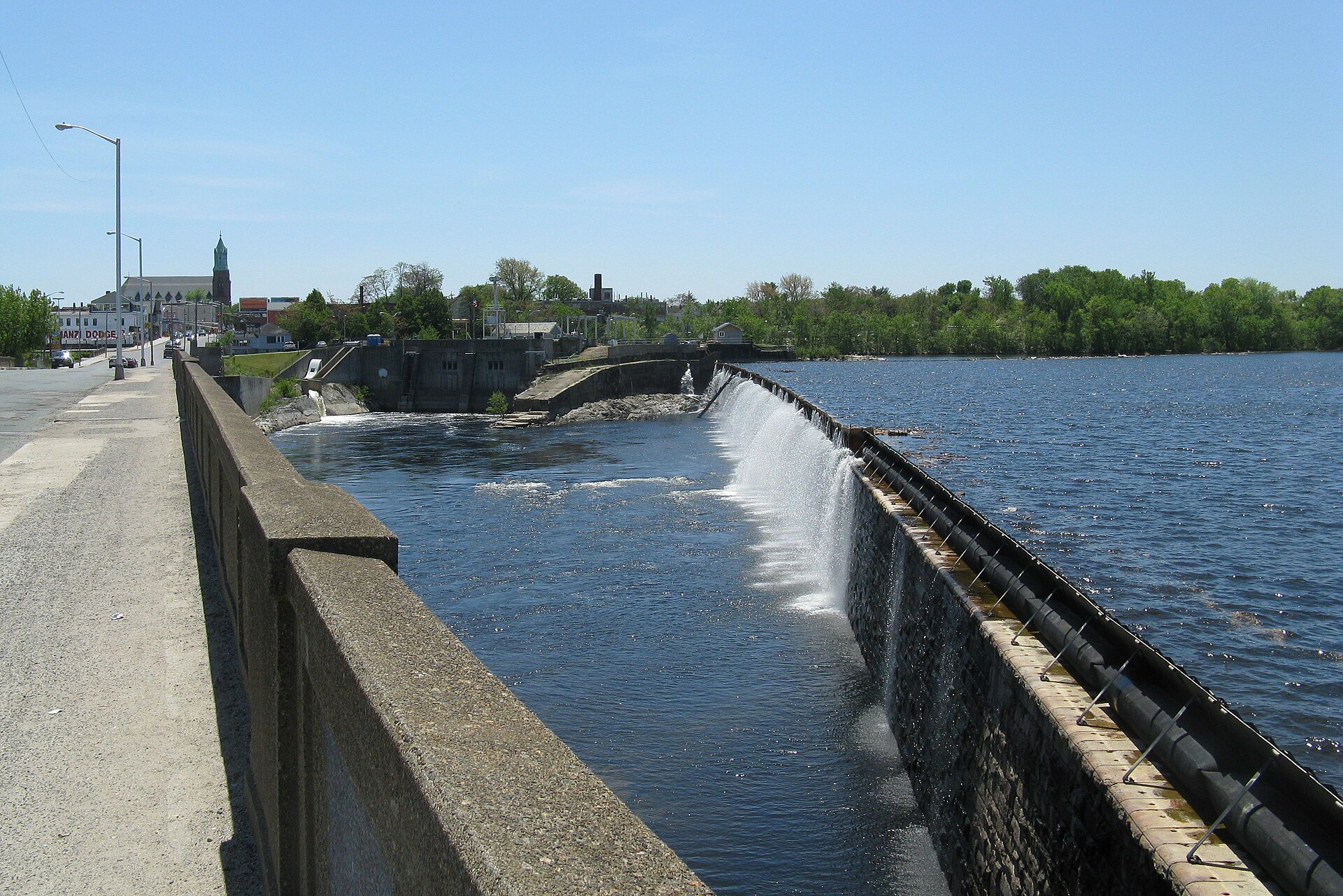
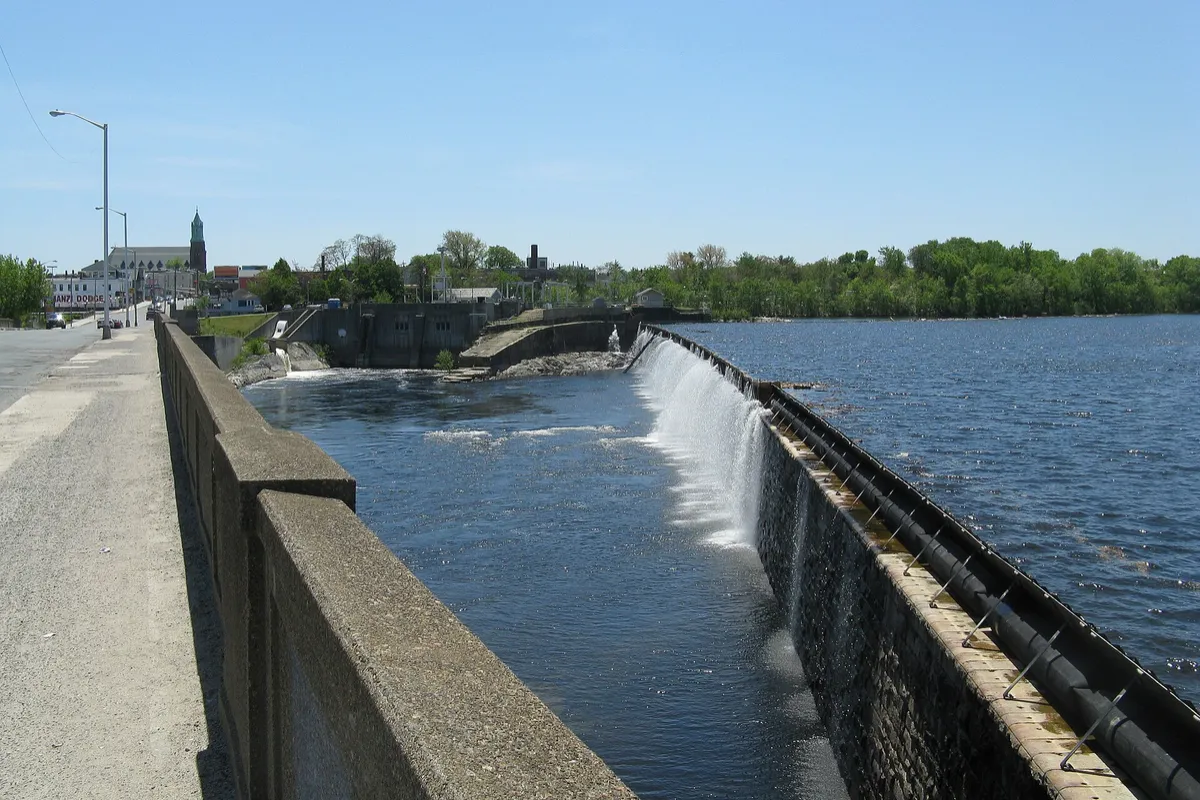
The Great Stone Dam on the Merrimack River in Lawrence. Photo: John Phelan, CC BY 3.0, via Wikimedia Commons.
The winter of 1935–36 buried New England in snow. Cold weather held on into March, so the drifts never melted. Then the rain started.
By March 12, 1936, Lawrence's newspapers had switched their headlines from news in Europe to the rising rivers. On March 13, the Wood Mill stopped work, and other mills soon followed. Heavy rain around St. Patrick's Day pushed the Merrimack up five feet in a single day.
A record river
On March 20, the river reached flood stage at a record 46.85 feet at the Lawrence Dam. The next day it hit 48 feet.
Someone at the mill took photographs as it happened, and some of those pictures survive in archives today. One, taken from the Wood Mill roof on Thursday, March 19, looks out over the flooded Duck Bridge. Another, shot from a weave room window the next morning, shows floodwater halfway up the Boston & Maine railroad cars parked in the Wood Mill yard. Others show water inside the mill, including the Cloth Shipping Room.
After the water
The 1936 flood hit mill cities all along the Merrimack, from Lowell to Haverhill. In the years after, new flood-control projects were built across New England to keep it from happening again.
Today the riverbank outside Riverwalk is a place for a lunchtime walk, not sandbags. But the river that powered these mills, and once flooded them, is still right there, just outside the windows.