
Our history | lawrence, massachusetts
A new chapter for a historic place.
From the mills that helped power a city to a thriving destination for business, community, and innovation, Riverwalk is a story of seeing possibility in a place ready for its next chapter.
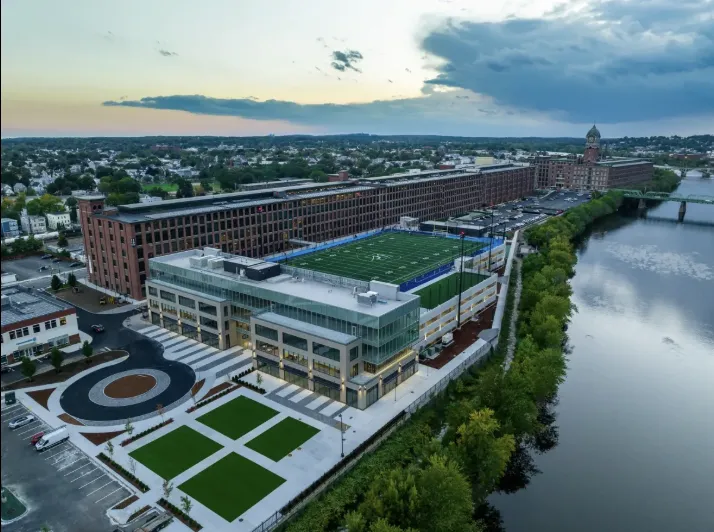
FROM MILL city TO INNOVATIVE DISTRICT
A legacy built on reinvention.
For generations, the Merrimack River powered Lawrence’s textile industry. The mills shaped the city’s economy, identity, and working life.
As textile manufacturing declined, many mill buildings became underused, but their scale and location still held enormous potential. In 2003, Sal Lupoli toured the complex while looking for real estate in the Merrimack Valley. He saw more than vacant buildings: he saw the opportunity to attract businesses, create jobs, and help Lawrence grow.
42 acres
Historic Mill District
Live / Work / Play
Mixed-Use Campus
Investment
$1.1B projected impact
THE STORY SO FAR
Built by industry. Reimagined for what's next.
Lawrence's industrial roots and the evolving vision for Riverwalk.
1845
1845
Lawrence takes shape
The Essex Company established Lawrence around the power of the Merrimack River, building the Great Stone Dam and canal system that fueled the city’s textile economy.
1845
- 1845
Lawrence takes shape
The Essex Company established Lawrence around the power of the Merrimack River, building the Great Stone Dam and canal system that fueled the city’s textile economy.
1900s
THE MILLS POWER A REGION
Mill complexes including Wood and Worsted became part of Lawrence’s manufacturing landscape, supporting textile production and generations of workers.
1900s
- 1900s
THE MILLS POWER A REGION
Mill complexes including Wood and Worsted became part of Lawrence’s manufacturing landscape, supporting textile production and generations of workers.
1900s
Mid-1900s
A Changing ECONOMY
As textile manufacturing shifted away from New England, mills across Lawrence closed or became underused. The complex that would become Riverwalk faced an uncertain future.
- Mid-1900s
A Changing ECONOMY
As textile manufacturing shifted away from New England, mills across Lawrence closed or became underused. The complex that would become Riverwalk faced an uncertain future.
2003
A DIFFERENT VISION
While searching for real estate in the Merrimack Valley, Sal Lupoli toured the mill complex. It didn’t fit his original plan, but he recognized its potential for jobs, investment, and economic development.
2003
- 2003
A DIFFERENT VISION
While searching for real estate in the Merrimack Valley, Sal Lupoli toured the mill complex. It didn’t fit his original plan, but he recognized its potential for jobs, investment, and economic development.
2003
2004
THE FIRST ACQUISITION
Lupoli purchased the first mill building and began a business-first redevelopment strategy focused on attracting employers, institutions, and services.
- 2004
THE FIRST ACQUISITION
Lupoli purchased the first mill building and began a business-first redevelopment strategy focused on attracting employers, institutions, and services.
2007+
GROWTH IN PHASES
Additional buildings were acquired and renovated. Healthcare, education, technology, and professional services established Riverwalk as a multi-tenant commercial campus.
2007+
- 2007+
GROWTH IN PHASES
Additional buildings were acquired and renovated. Healthcare, education, technology, and professional services established Riverwalk as a multi-tenant commercial campus.
2007+
Today
a district still evolving
Riverwalk brings together commercial, retail, medical, education, residential, and community uses, with space for established organizations and growing businesses.
- Today
a district still evolving
Riverwalk brings together commercial, retail, medical, education, residential, and community uses, with space for established organizations and growing businesses.
THE people BEHIND THE VISION
A family vision. A lasting legacy.
“Who you are is where you came from.”
Sal Lupoli’s grandparents came to America from Italy in 1940 and opened a small pizzeria in Revere Beach to help fund their olive oil business. Years later, Sal and his brother Nick opened their first Sal’s Pizza in Salem, New Hampshire.
That entrepreneurial foundation shaped Sal’s path into real estate. When he saw the potential in Lawrence’s former mill complex, he envisioned jobs, investment, and a place where businesses and people could grow together. Riverwalk became a defining part of that vision.
“He didn’t see abandoned buildings. He saw jobs and the potential for growth.”
— Sal Lupoli jr.
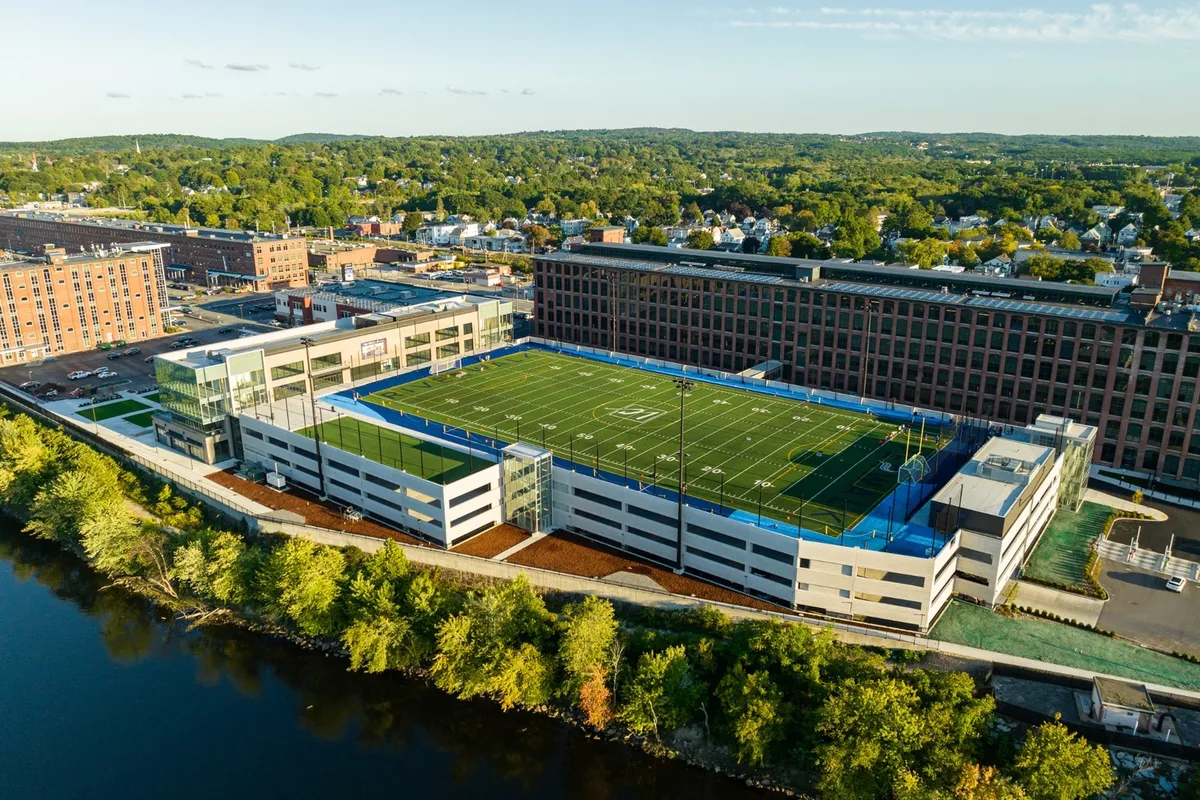
A HISTORIC PLACE, A NEW PURPOSE
Honoring the past.
Building what’s next.
The campus connects Lawrence’s industrial legacy with contemporary workplaces, services, public spaces, and new opportunities. Its next chapter continues to take shape alongside the city and the Merrimack River.
Stories from Riverwalk
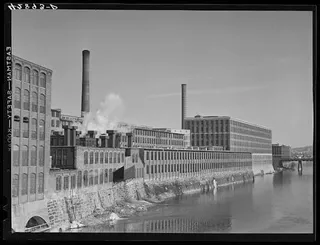
The Long Goodbye: How the Mills Went Quiet
In the 1920s American Woolen ran 60 mills. By 1955 it was nearly bankrupt. How Lawrence's mills went quiet, and what came next. ...more
Mill History
November 09, 2026•1 min read
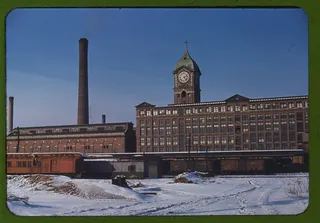
Wool for the War: American Woolen in World War II
Both world wars kept the American Woolen Company busy. In WWII it ranked 51st among U.S. corporations in military contracts. ...more
Mill History
November 09, 2026•1 min read
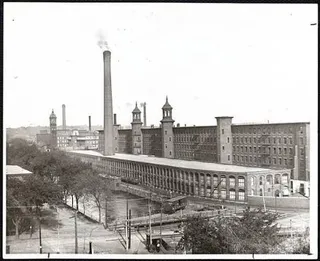
1958: The Year Half the Mill Came Down
The Wood Mill you see today is half the original. In 1958 its north wing along the river was torn down. Here is what was lost. ...more
Mill History
November 09, 2026•1 min read
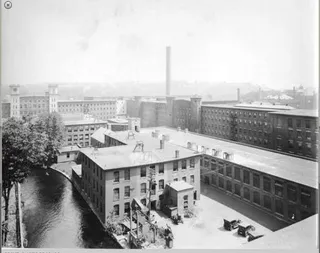
The Power House and the Day the Smokestacks Fell
The Wood Mill had its own power house, built in 1905–06. Its smokestacks came down on October 15, 2009, clearing the way for Riverwalk. ...more
Mill History
November 09, 2026•1 min read
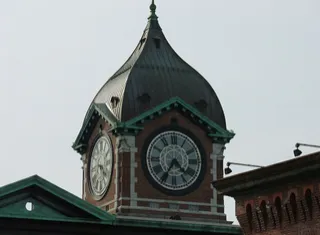
The Clock That Rivals Big Ben
The Ayer Mill clock's faces are just six inches smaller than Big Ben's. It went dark in 1955, and Lawrence brought it back. ...more
Mill History
November 09, 2026•1 min read
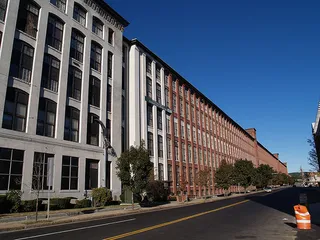
17 Miles of Aisles: Inside the Design of the Wood Mill
Six stories, 1,300 feet long, 17 miles of aisles and rows of huge windows: how the 'eighth wonder of the world' was designed. ...more
Mill History
November 09, 2026•1 min read
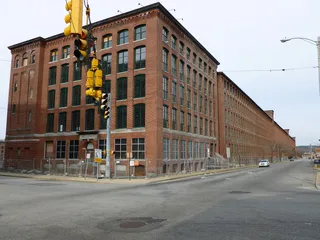
The Tunnel Under Union Street
The Wood Mill and the Ayer Mill stood on opposite sides of Union Street, linked by a tunnel underground and bridges over the tracks. ...more
Mill History
November 09, 2026•1 min read
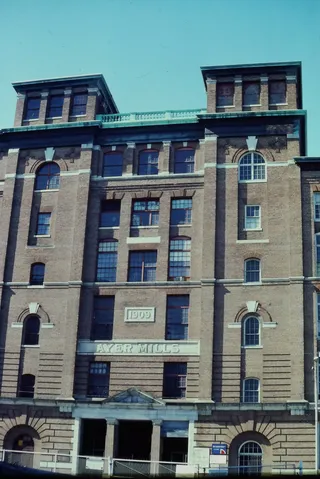
Frederick Ayer and Opening Night, October 3, 1910
The Ayer Mill opened across Union Street on October 3, 1910, and its clock rang for the first time that night. Meet the man it's named for. ...more
Mill History
November 09, 2026•1 min read
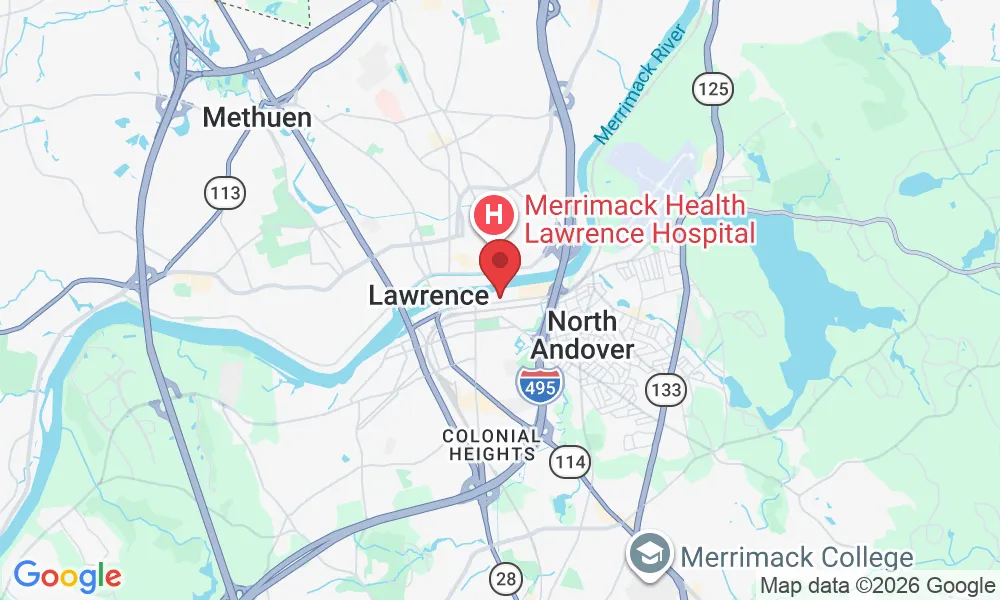
Connected to everything.
Riverwalk Innovation District is ideally located in Lawrence, MA, with direct access to I-495, I-93, I-95 and the MBTA commuter rail - putting your business, employees, and customers closer to greater opportunities.
Direct access to I-495
Minutes to I-93 and I-95
MBTA Commuter Rail (Lawrence Station)
35 minutes to Manchester-Boston Regional Airport
Let's build what's next.
LEASING INQUIRIES
Whether you're looking for office, retail, medical or flex space, our team is here to help you find the right fit at Riverwalk Innovation District.


Copyright 2026 | A Lupoli Companies Brand | Terms & Conditions